Christmas Tree Outline Embroidery
First Impression: Clean, Festive, and Versatile
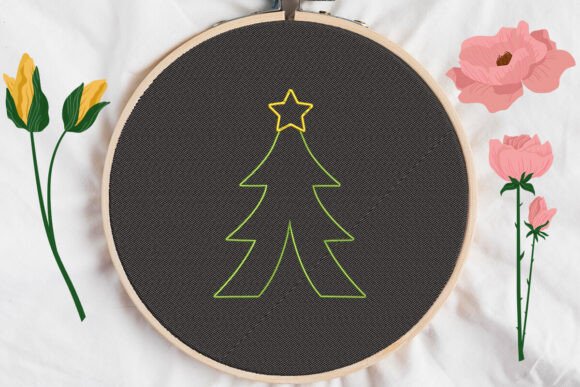
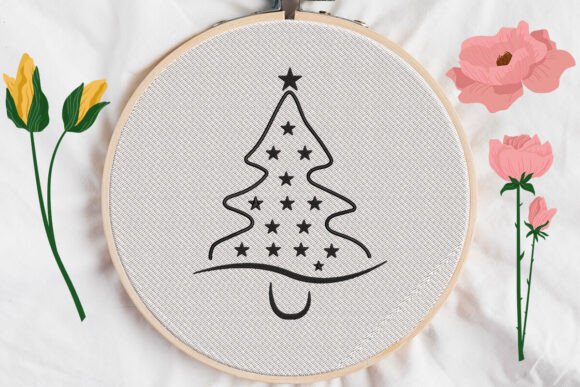
As an embroidery designer who’s prepped over 200 craft fair booths—and shipped thousands of finished products—I opened Christmas Tree Outline Embroidery expecting a simple silhouette. What I found was exactly that: a confident, unfussy outline with balanced proportions and thoughtful negative space. It reads as modern-festive—not cutesy, not overly rustic, not cartoonish. That’s gold for handmade markets. Customers scanning your booth at 10 a.m. on a snowy Saturday don’t pause for complexity—they lock onto clarity, charm, and instant recognition. This design delivers all three.
Where It Shines: Craft Fair & Boutique Product Pairings
Tote bags: A standout. The outline scales beautifully from 3” to 6” wide—ideal for the front pocket or centered on the main panel. On natural canvas or oat linen, it reads as elevated handmade—not mass-produced. Pair it with a subtle thread color (forest green, charcoal, or cream) and it becomes a quiet signature piece.
Aprons and tea towel embroidery: Perfect for the “kitchen nostalgia” shopper. The clean line works with vintage-inspired fabrics and avoids visual clutter next to flour sacks or wooden spoons. Unlike dense fill designs, this one won’t stiffen fabric or snag dish towels during use.
Embroidered patches and small pouches: Excellent candidate for iron-on or sew-on patches. Its open shape allows easy backing and clean edge finishing. On 4”–5” drawstring pouches (great for gift cards or ornaments), it reads clearly without overwhelming the scale.
Pillow covers and caps: Use at 2.5”–3.5” on pillow corners or cap fronts. The outline adapts well to gentle curves—no distortion if hooped correctly. Avoid placing it directly over seams or high-stretch zones unless stabilized with cutaway + topping.
Booth samples and printable mockups: This design photographs exceptionally well—even on phone cameras. Its contrast-friendly shape means you can showcase it across light/dark fabric swatches in your Etsy listing without retouching. Real buyers respond to that authenticity.
Production Reality Check: What Makes It Booth-Ready
Christmas Tree Outline Embroidery is inherently batch-friendly. No tiny lettering, no nested branches, no gradients or satin stitches that demand constant tension checks. You’ll get consistent results across dozens of tote bags or aprons—if you follow core prep steps.
- It’s intuitive at a glance: No decoding needed. Buyers instantly recognize it as *a Christmas tree*, not “an abstract shape.” That reduces hesitation at your booth.
- Scales smartly: Works as a 1.75” accent on a cuff or a 5.5” focal point on a market bag—no redesign required.
- Photographs like a pro: Crisp edges translate cleanly to digital listings. Pair it with natural lighting and a neutral background for strong Etsy thumbnails.
- Feels premium, not generic: Because it’s an outline—not a clipart-style filled tree—it signals intentional design. That lifts perceived value on handmade products.
Careful-Use Notes: Protect Your Stitch Quality
This isn’t a “hoop-and-go” file—but the precautions are straightforward:
- Avoid using it on very thick fabric (like heavy denim jackets) without testing stitch density first. Dense appliqué layers (if included in your version) may require extra stabilizer.
- On textured tea towels, use a light tear-away + water-soluble topping to prevent skipped stitches in the outline’s curves.
- For dark fabric, choose thread with high contrast (e.g., white or metallic silver)—but verify thread color visibility in person, not just on screen.
- On curved cap surfaces, reduce size to ≤3” and hoop with cap frame + medium-cutaway stabilizer. Test on scrap first—outline integrity matters more than size here.
- If your version includes fine interior details (e.g., tiny star or trunk texture), confirm they remain legible at ≤2.25”. Tiny features vanish on small-scale items.
Design Impact: More Than Just a Tree
In your booth, Christmas Tree Outline Embroidery does quiet but powerful work. It anchors seasonal cohesion—pair it with matching patch sets or coordinated thread palettes across your product range. It reinforces handmade quality because its simplicity reveals stitch precision: wobbly lines or uneven tension show up fast. That builds trust. And because it’s not overly thematic (no Santa hats or candy canes attached), it fits seamlessly into brand-consistent lines—whether your shop leans minimalist, farmhouse, or modern Scandinavian.
For Etsy sellers and digital embroidery file shops: this design performs strongly as both a finished product and a digital embroidery file. Its clean aesthetic attracts repeat buyers looking for cohesive holiday collections—not one-off novelties. Include it in bundles (“Holiday Outline Set”) and watch cross-sell lift.
Pro Designer Checklist Before Booth Day
- Test on scrap fabric matching your production materials—especially textured towels or stretchy knits.
- Check thread contrast under natural light—not just LED booth lighting.
- Review spacing between elements if layered (e.g., trunk base vs. branch tips). Tight spacing = risk of stitching overlap.
- Confirm hoop size compatibility with your machine and intended product (e.g., cap frames need specific dimensions).
- Inspect stitch density in curved sections—look for long satin runs or excessive jump stitches.
- Use the right stabilizer: Medium cutaway for stable fabrics; tear-away + topping for towels and napped fabrics.
- Create at least one real mockup—not just a digital preview. See how it feels in hand, drapes on fabric, and catches light.
- Compare fabric colors side-by-side: ivory vs. oat vs. charcoal linen react differently to the same thread.
- Confirm commercial licensing before selling finished products—this applies whether you’re embroidering 5 tote bags or 500.
Bottom line? Christmas Tree Outline Embroidery is a craft fair workhorse—not flashy, but deeply reliable. It sells because it looks great in person, produces cleanly, photographs honestly, and feels intentionally designed. In a sea of glitter and overload, sometimes the simplest outline is the strongest statement you’ll make at your booth.